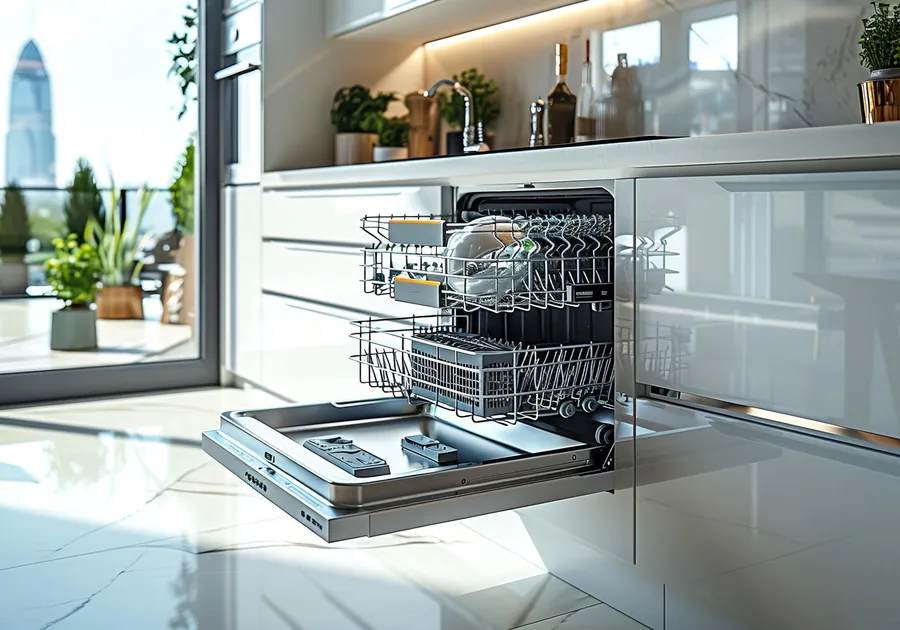
An inch of grey water in the bottom at the end of the cycle. It looks like a dead pump and most of the time it is not. Work down this list in order.
One: the filter
It is in the base of the tub. Twist and lift it out. On a machine nobody has ever been shown how to service, this will be a solid mat of everything the household has eaten this year. Rinse it, brush the mesh, seat it properly on the way back. On its own this solves a good share of these.
Two: the air gap
The small chrome cylinder on the worktop beside the tap, if you have one. Twist the cap off and check it is clear. A blocked air gap pushes water straight back into the machine and clearing it takes a minute.
Three: the drain hose and the disposer
Under the sink, the hose from the dishwasher should rise high before it drops into the disposer or the standpipe. Lying flat, or knocked loose during other work, and it will not empty properly.
The one people miss: a new garbage disposer fitted recently and a dishwasher that stopped draining the same week is not a coincidence. New disposers ship with a knockout plug in the dishwasher inlet, and it has to be punched out during installation. It gets left in more often than anybody would like.
Four: the pump
Now it is a service call. The drain pump, its impeller, or the check valve behind it. On most machines this is a reachable part and a same-visit repair. On an integrated machine the careful part is getting it out from under the worktop and back without marking the panel or the run beside it.
Try the first three. If it is still full, call 866-264-9578 and say what you already checked, it saves us both a step.